


Turbo VPN - Secure VPN Proxy
Innovative Connecting
I usually judge a VPN by what happens after the first few days. The initial connection is easy to celebrate, but the more important question is whether the app remains useful when I am simply checking email on public Wi-Fi, watching a video while traveling, or trying to keep routine browsing more private. Turbo VPN - Secure VPN Proxy makes a strong first impression because it is a free tools app with a simple purpose: create a VPN connection without turning the setup into a technical project. In my experience, that straightforward approach is the main reason it is so approachable.
Developed by Innovative Connecting, the app has become a familiar choice for people who want a quick privacy layer on Android. It has a 4.7 average from around 10 million ratings and has passed 500 million installs, which tells me that its appeal is not limited to VPN enthusiasts. It is aimed at ordinary phone users who want a button they can understand, rather than a network lesson before they can browse.
That accessibility is valuable, but it also creates a trade-off. A VPN is not a magic shield for every part of online life, and a simple interface can hide decisions that experienced users may want to control. My review focuses on whether Turbo VPN continues to earn a place on a phone once the novelty of trying it has disappeared.
From an easy first week to a useful routine
The first week is where Turbo VPN feels most convincing. Installation is free, the content rating is Everyone, and the app runs on Android starting with version 6.0. I can imagine recommending it to a friend who has never used a VPN: the basic idea is easy to grasp, and the app does not present itself as a complicated networking utility. The store summary emphasizes faster streaming and a more secure, private connection, but I would treat those as goals rather than promises that apply equally to every network and every location.
My first practical test with any VPN is not an elaborate privacy experiment. I connect before using an unfamiliar café network, open the sites I normally use, and see whether the extra step is tolerable. Turbo VPN fits that habit well because the central action is obvious. If the connection works as expected, I can leave the app and continue using the phone without changing how I browse.
Related News

Why WhatsApp Messenger Still Makes Everyday Communication Feel Easy

Jurassic World: The Game Is the Better Dino Tycoon for Strategic Players

Threads in Real Life: Who Should Join, Lurk, or Leave

How SHEIN Turned Shopping Into an Endless Content Feed

How to Make Fortnite Feel Smarter on Mobile

Should You Switch to Microsoft Outlook on Mobile?
A second useful test is switching between mobile data and Wi-Fi. Phones move between networks constantly, and a VPN that is convenient only when launched manually can become forgettable. Turbo VPN is at its best when I remember it as a quick pre-browsing check: open the app, establish the connection, then carry on. That workflow is more realistic than expecting me to keep studying server settings or network terminology.
The most important first-week tip is to judge it during your own normal activities, not only during a speed test. Try a video call, ordinary web pages, banking access, and media playback at the times you usually use them. A connection that feels fine for reading may feel less comfortable for a live call, while a server that works well in the morning may not be the best choice later. This is not a flaw unique to Turbo VPN; it is a reminder that VPN performance depends on the route between your device, the VPN server, and the service you are reaching.
Streaming is another reason people may install it, and the app positions itself around fast streaming. I would still avoid choosing it solely on the assumption that every streaming platform or video library will behave differently once the VPN is active. Services can identify VPN traffic, and a VPN may sometimes make a connection less predictable rather than more convenient. For everyday playback, my advice is to compare the experience with and without the connection and keep expectations practical.
Gallery
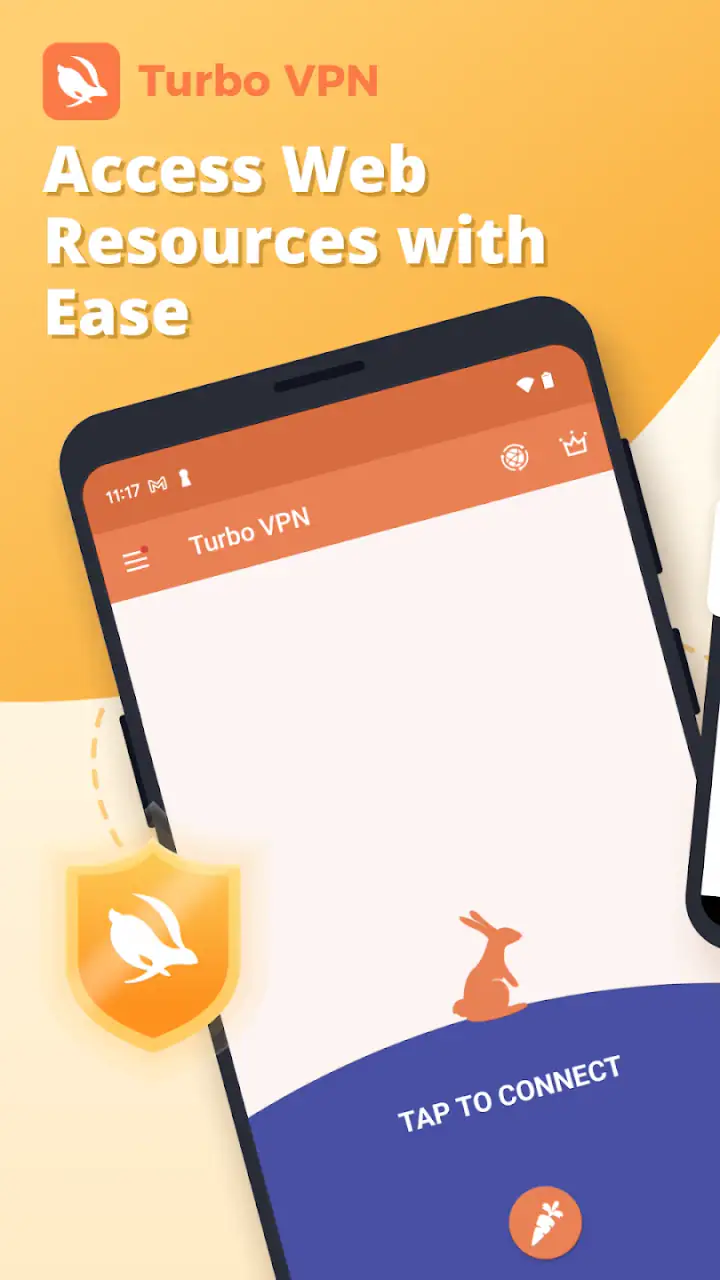
The free entry point is attractive, especially for someone who wants to try a VPN before committing money. However, free does not mean every experience is identical. Turbo VPN includes in-app purchases ranging from $0.99 to $69.99 per item, so I would read each purchase screen carefully instead of assuming that all useful options are included without charge. The app is easy to try, but the decision to pay should come after identifying a recurring need, not after a single successful connection.
Where it helps in ordinary life
A realistic everyday scenario is a short work session in a hotel lobby. I might connect my phone to the available Wi-Fi, activate Turbo VPN before checking messages, and use it as an additional privacy measure while handling routine browsing. It does not replace sensible behavior: I still avoid opening unexpected links, use strong account passwords, and check that sensitive sites are using their own secure connections. The VPN is one layer in that routine, not the whole routine.
It can also be useful for travelers who frequently move between networks and do not want to remember a different setup for each one. The value here is less about dramatic changes to the internet and more about reducing the number of times I browse unprotected by accident. A tool that is quick enough to use repeatedly has a better chance of becoming a habit than one that demands attention every time.
Another non-obvious use is troubleshooting. If a familiar website behaves strangely, I can compare the connection with Turbo VPN active and inactive. That comparison may help me identify whether the problem is related to the local network route. It is not a definitive diagnostic test, and I would not treat one failed connection as proof of blocking or censorship, but the contrast can be useful when deciding whether to restart the router, change networks, or simply wait.
For families, the Everyone rating may make the app feel broadly approachable, but I would not confuse an age rating with parental supervision or a complete online safety system. A VPN does not automatically filter unsuitable material, teach children to recognize scams, or prevent every tracking technique. If the goal is child safety, dedicated family controls and clear household rules are more appropriate tools.
What changes after the first month
After the first month, the question becomes whether I still have a reason to open it. A VPN earns lasting space when it supports a repeatable situation: public networks, frequent travel, a work routine that benefits from an added privacy layer, or a personal preference for routing traffic through a VPN. If none of those situations occur, the app may become another icon that I installed with good intentions and rarely use.
Turbo VPN’s strongest long-term quality is its low learning curve. I do not need to become interested in VPN technology to get value from it. That matters for friends and relatives who would never configure a VPN manually. The app can turn a specialist habit into a simple routine, provided the connection remains reliable enough for the activities that matter to them.
At the same time, simplicity becomes less satisfying when my needs become more specific. A user who wants detailed control over protocols, extensive connection rules, fine-grained split tunneling, or a carefully documented privacy workflow may eventually prefer a more advanced VPN service. Turbo VPN is easier to approach than many technical alternatives, but ease of use is not the same as depth of control.
I also would not make the app a permanent background assumption without occasionally checking how it affects my phone. Any VPN can influence battery use, connection behavior, and the way certain apps reach their servers. If I notice that a particular app is slower or refuses to connect, I would first disconnect the VPN and compare. That simple test prevents me from blaming the phone, the Wi-Fi network, or the app itself without evidence.
The current version is 4.2.9.13, and keeping an app updated is part of maintaining a sensible routine. I would not install a VPN once and then forget about it indefinitely. Updates can change the interface, connection behavior, or purchase presentation, so I would glance at what has changed before relying on it for an important trip. The maintenance is modest, but it is still maintenance.
The small burdens that become visible over time
The first source of fatigue is the extra step. When I am in a hurry, activating a VPN can feel unnecessary, especially on a trusted home network. If the app becomes a button I ignore most of the time, its theoretical privacy benefit does not translate into much practical value. The best long-term use is selective: I would activate it when the context justifies it rather than treating every connection as equally risky.
The second source is compatibility. Some websites and services dislike VPN traffic, and a connection may need to be disabled temporarily when a login, payment page, or media service behaves unexpectedly. That interruption is manageable, but it weakens the idea of a completely invisible privacy tool. I prefer a VPN that I can turn off quickly and test without losing track of what changed.
Speed is another consideration. Turbo VPN promotes fast streaming, yet no VPN can guarantee the same result on every network. Encryption and routing add another stage between the phone and the destination. For casual browsing, the difference may be unimportant; for large downloads, live video, or competitive online games, even a small increase in delay can matter. If low latency is the priority, I would compare the app with a specialist service that publishes more detailed performance information and offers controls aimed at demanding users.
There is also a trust decision that comes with any VPN. I am choosing to route traffic through another service instead of sending it directly through my internet provider or mobile network. The app’s friendly design makes that decision easy to overlook, but it should not be overlooked. I would use it for the situations where a VPN is genuinely helpful, avoid treating it as a guarantee of anonymity, and keep sensitive accounts protected with their own security measures.
In-app purchases can add another layer of friction. The free option lowers the barrier to entry, but I would pay only if the app solves a problem I face repeatedly. Someone who uses a VPN once during a holiday may not receive enough ongoing value to justify a purchase. Someone who connects on public Wi-Fi every week may view the cost differently. The correct choice depends on habit, not on the presence of a payment option.
How it compares with familiar alternatives
Compared with not using a VPN at all, Turbo VPN is more useful for people who regularly connect through networks they do not fully trust. It adds a deliberate privacy step without requiring the user to understand every technical detail. That is its clearest advantage over the usual default: doing nothing.
Compared with manually configuring a VPN through the phone’s network settings, it is more convenient. Manual setup can be appropriate for someone whose employer, school, or private provider supplies exact connection details, but it is not the friendliest route for a casual user. Turbo VPN is designed for the person who wants an app-led experience rather than a configuration exercise.
Compared with premium, specialist VPN products, the trade-off is more complicated. A specialist service may be a better fit for someone who needs extensive location choices, advanced controls, consistent high-speed performance, or a clearly defined professional workflow. Turbo VPN makes more sense when the priority is a low-friction, free starting point and occasional privacy on everyday networks.
I would also distinguish it from a browser’s private mode. Private browsing mainly limits what is saved locally in that browser session; it does not perform the same network-routing role as a VPN. Conversely, a VPN does not erase browser history, protect an account from phishing, or make a careless download safe. Understanding that difference is essential if the app is going to occupy a permanent place on the phone.
Who should keep it installed
I think Turbo VPN is a good match for a casual Android user who wants a simple way to add a VPN connection during travel, public Wi-Fi sessions, or occasional privacy-conscious browsing. It is also suitable for someone introducing a less technical friend to VPNs, because the free starting point and Everyone rating make the first trial less intimidating.
I would be more cautious about recommending it as the main tool for a professional who depends on stable low-latency connections, needs detailed network policies, or wants extensive control over how individual apps use the VPN. Gamers who are sensitive to delay, frequent streamers dealing with platform restrictions, and users with strict workplace requirements may be better served by a service built around those specific needs.
Before keeping it installed, I would answer three practical questions. Do I often use networks I do not control? Am I willing to disconnect it when a service has trouble? And will I remember to activate it when the situation calls for it? If the answer to all three is yes, the app has a realistic chance of becoming useful rather than decorative.
My long-term verdict
Turbo VPN earns lasting value through convenience, not through advanced customization. I like that it lowers the barrier to trying a VPN and fits naturally into a public-Wi-Fi or travel routine. Its large user base and strong average rating reinforce that it has broad appeal, but those figures do not replace my own checks for speed, compatibility, and comfort with the service.
After the novelty fades, I would keep it installed if I regularly need a quick privacy layer and accept that some sites or apps may work better with the VPN turned off. I would remove it, or choose a more advanced alternative, if I rarely use public networks or if connection control and dependable low latency matter more than simplicity.
My recommendation is therefore positive but measured. Try the free version, test it during the situations that actually matter to you, and do not confuse a VPN with complete anonymity or general security. If the app becomes a small, repeatable part of your routine, it has earned its space. If activating it feels like an obligation every time you pick up the phone, its first-week appeal probably will not survive the month.
For readers deciding whether to pay, I would wait until the app has proved useful across several ordinary situations rather than buying immediately. The price range of the in-app purchases can suit different levels of commitment, but the lasting question is simple: does Turbo VPN solve a problem you encounter often enough to justify another maintained app? For many casual Android users, the answer can be yes. For demanding or highly technical users, a more specialized VPN will likely be the better long-term home.
FAQs for Turbo VPN - Secure VPN Proxy
What features does Turbo VPN offer?
Turbo VPN provides a secure and private connection over the internet by encrypting your data. It offers access to a wide range of global servers, allowing users to bypass geo-restrictions and enjoy content from anywhere. The app also promises a fast connection and is compatible with both Wi-Fi and mobile data networks.
Is Turbo VPN free to use?
Turbo VPN offers both free and premium versions. The free version provides basic features like secure browsing, but may include ads and limited server locations. The premium version, available through a subscription, offers an ad-free experience, faster speeds, and access to more server locations globally.
How does Turbo VPN ensure my online privacy?
Turbo VPN uses advanced encryption protocols to secure your internet data, making it difficult for third parties to monitor your online activities. By masking your IP address, it protects your identity and location, ensuring a safer browsing experience, especially when using public Wi-Fi networks.
Is Turbo VPN available on both Android and iOS?
Yes, Turbo VPN is available for both Android and iOS devices. Users can download it from the Google Play Store or Apple App Store. The app is designed to be user-friendly on both platforms, providing a consistent and seamless experience across different devices.
Does Turbo VPN affect internet speed?
While VPNs can sometimes reduce internet speed due to encryption processes, Turbo VPN is designed to minimize this effect. The app claims to offer high-speed connections by optimizing server performance. However, the speed may vary based on server load and your internet provider's bandwidth.
Pros
- Fast connection speeds for streaming
- User-friendly interface with easy setup
- Large server network for global access
- No registration required to use
- Strong encryption for secure browsing
Cons
- Free version has limited features
- Ads can be intrusive during use
- Some servers may slow down at peak times
- Occasional connectivity drops
- Privacy policy lacks transparency


